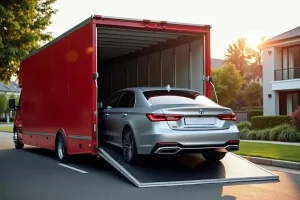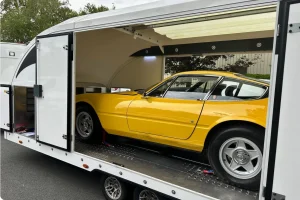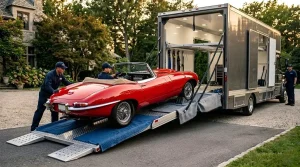

Enclosed car transport moves vehicles inside a covered trailer, offering additional protection against weather and road debris. It is worth considering for classic cars, luxury vehicles, exotic sports cars, and automobiles requiring specialized handling.
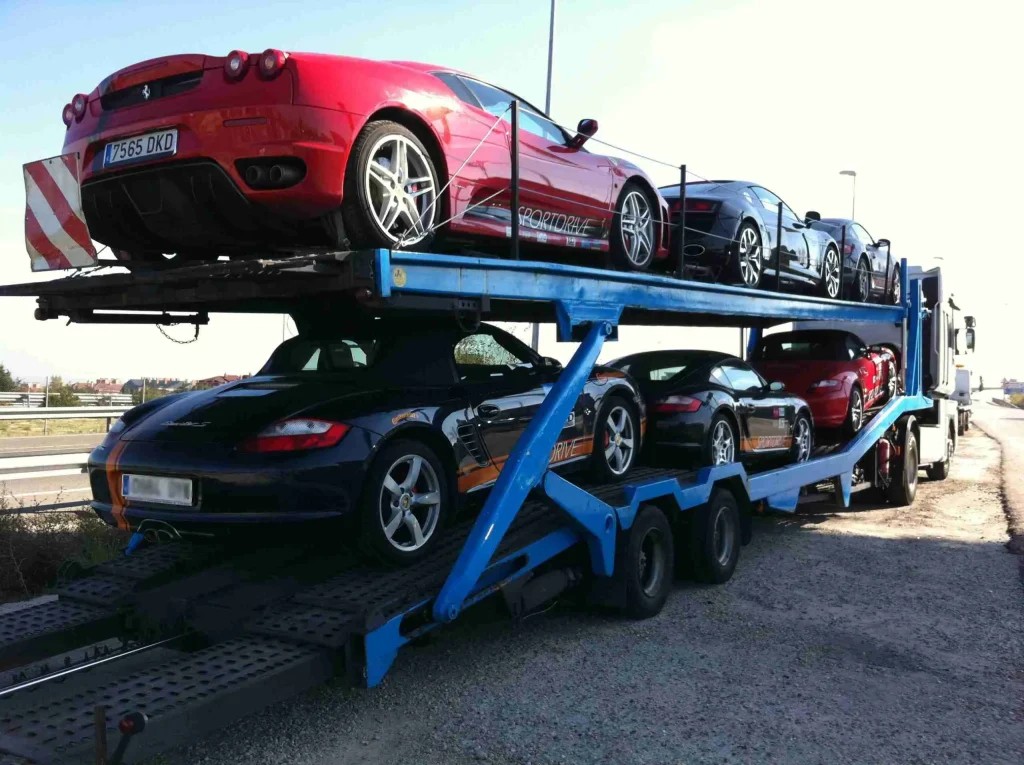
Some vehicles require more consideration than ordinary daily drivers when it comes to transportation. Classic automobiles, luxury sedans, exotic sports cars, restored vehicles, and specialty models may benefit from the additional environmental protection provided by enclosed car transport.
Rapid Hill Car Transport helps customers explore vehicle transportation options from Glendale, California, and other eligible locations. If you are planning to move a valuable or specialty vehicle, enclosed transport may be an appropriate option depending on the vehicle, route, equipment requirements, and carrier availability.
Enclosed car transport uses a covered trailer designed to carry vehicles inside a protected space. Unlike open carriers, enclosed trailers provide a physical barrier between the vehicle and many outside elements.
This additional enclosure helps reduce direct exposure to rain, dust, road debris, and other environmental conditions encountered during a journey.
Enclosed transportation is available in different configurations. Equipment, loading methods, trailer capacity, and clearance requirements vary by carrier. The right option depends on the vehicle’s dimensions, ground clearance, condition, and handling needs.
The enclosed trailer provides an extra layer of protection from direct weather exposure and road debris. This can be especially valuable for vehicles with delicate finishes, recently restored paintwork, or specialty components.
Although an enclosed trailer offers additional protection, it does not eliminate every transportation risk. Customers should still review the carrier’s handling procedures and insurance arrangements.
Owners of classic vehicles often invest considerable time and money in maintenance, restoration, and preservation. Enclosed shipping may help reduce unnecessary environmental exposure while the vehicle is being transported.
Before booking, discuss any special handling instructions, vehicle dimensions, loading restrictions, and documentation requirements.
Luxury and exotic automobiles may feature low ground clearance, specialized bodywork, expensive wheels, or delicate exterior components. An appropriate enclosed carrier may offer equipment better suited to these requirements.
Customers should confirm that the carrier has the necessary equipment and experience for their particular vehicle instead of assuming every enclosed trailer is suitable.
For some owners, the additional protection offered by enclosed transport is an important consideration even when the vehicle is fully operational. Choosing a transport method that fits the vehicle’s value and condition can make the shipping process more comfortable.
Enclosed transport may be appropriate for classic cars, collectible automobiles, high-value sports cars, luxury vehicles, restored vehicles, show cars, and some specialty vehicles with particular handling requirements.
It can also be considered when an owner wants additional protection from outside conditions during transportation.
However, enclosed shipping generally costs more than open transport. Customers should weigh the added protection against the vehicle’s specific needs and their available budget.
First, provide the vehicle’s year, make, model, dimensions where relevant, operating condition, pickup location, destination, and preferred shipping dates.
Explain any special requirements, such as low ground clearance, modified suspension, nonstandard dimensions, or delicate components. This information helps determine whether the available carrier equipment is suitable.
Before confirming the booking, review the price, estimated schedule, pickup and delivery arrangements, payment conditions, cancellation terms, and insurance coverage.
Prepare the vehicle by documenting its condition, removing personal belongings, and following the carrier’s instructions. At pickup, verify that the inspection report accurately records existing damage.
During delivery, inspect the vehicle carefully, compare its condition with the original documentation, and record any concerns on the relevant paperwork.
Enclosed car transport usually costs more than open shipping because covered trailers may have lower vehicle capacity, specialized equipment, and different operating expenses.
Pricing depends on route distance, vehicle size, pickup accessibility, carrier availability, seasonal demand, scheduling, and special handling requirements.
A low-clearance exotic vehicle may require a different arrangement from a standard luxury sedan. For this reason, a detailed quote is more useful than a general price estimate.
Clean the exterior and photograph all sides of the vehicle. Document existing scratches, dents, paint imperfections, and other visible conditions.
Remove personal items and loose accessories. Inform the carrier about any modifications, fluid leaks, alarm systems, or mechanical issues that may affect loading.
Confirm how the vehicle will be loaded and secured, particularly if it has limited ground clearance. Review the applicable insurance details and ask how damage claims are handled before the vehicle is collected.
Rapid Hill Car Transport provides information and booking assistance for customers exploring enclosed vehicle transportation from Glendale, California, subject to route and carrier availability.
Whether you are moving a collector car to another state or arranging transportation for a luxury vehicle, discuss the vehicle’s requirements before selecting a shipping method.
Find answers to some common questions about car shipping and vehicle transportation.
Car transport costs depend on the distance, vehicle size, pickup and delivery locations, carrier availability, transportation method, and schedule. Open transport is often more economical than enclosed transport. Request a route-specific quote for a more accurate estimate.
Transit time depends on the distance, route, weather, traffic, pickup scheduling, and the carrier's other deliveries. Ask for an estimated pickup and delivery window before booking, and confirm whether any dates are guaranteed in writing.
Open transport carries vehicles on an uncovered carrier and is commonly used for everyday cars. Enclosed transport carries vehicles inside a covered trailer, providing additional protection from weather and road debris. Enclosed shipping generally costs more.
Pickup and delivery can generally be arranged near your specified addresses when the locations are accessible and safe for the carrier. Narrow streets, parking restrictions, and other obstacles may require meeting the driver at a nearby suitable location.
Clean your vehicle, take photographs of its condition, remove personal belongings, secure loose accessories, and disclose mechanical problems. Follow the carrier's instructions and review the inspection report and bill of lading at pickup and delivery.